
April 7, 2026
The Battle is The Lord's
Author
The Power of Perseverance and Non-Compromise
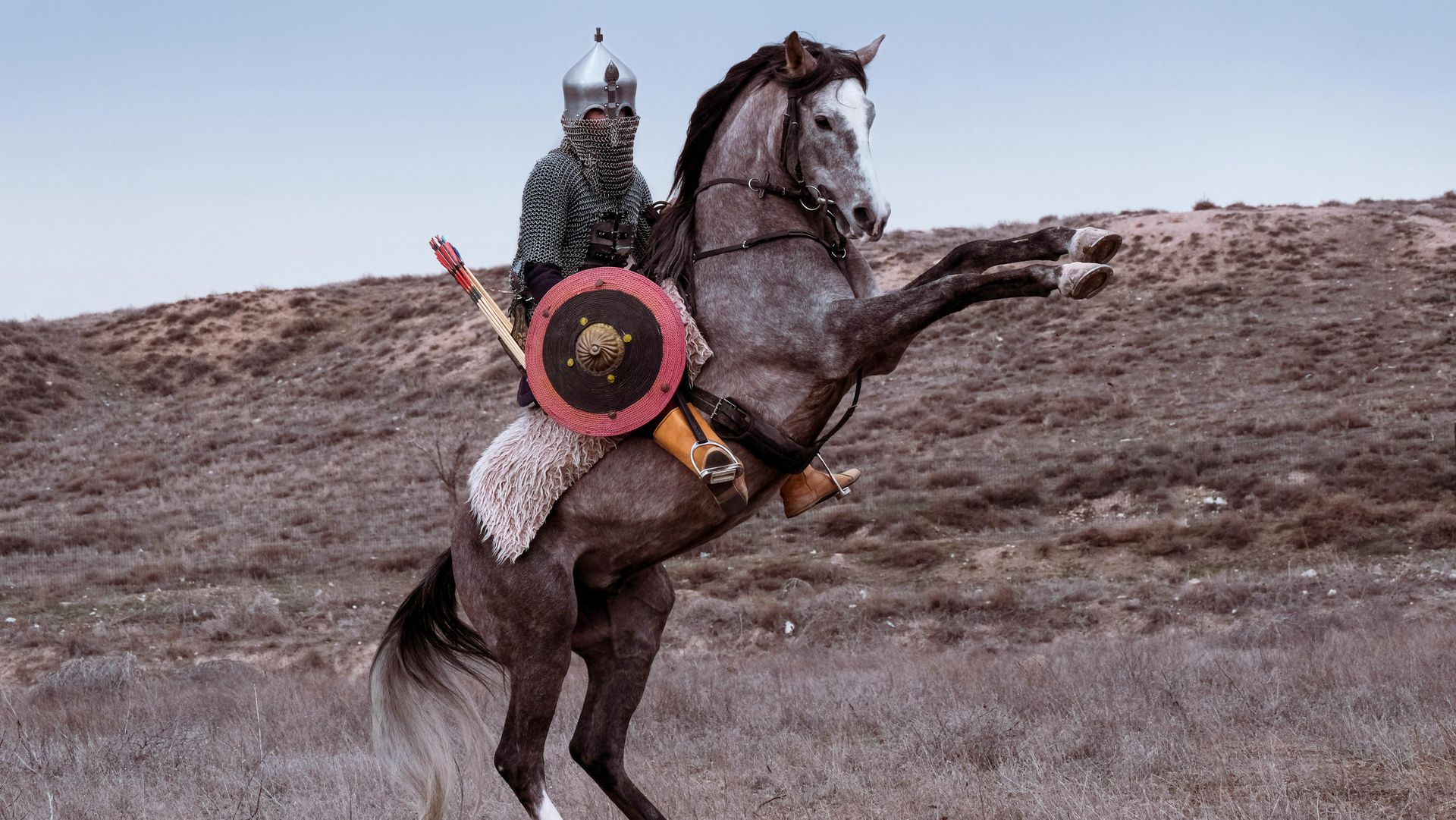
In Exodus 7-8, Moses appeared before Pharaoh, calling for the release of the people of Israel. Standing before the king, Aaron cast his staff on the ground, and it became a living serpent. Pharaoh’s magicians and sorcerers did the same (Exodus 7:11). Moses returned the next day, and striking the waters of the Nile, they turned to blood, killing the fish, and poisoning the water. Pharaoh's magicians repeated the same miracle, and the king’s heart was unmoved. Seven days later, Aaron stretched out his staff and frogs came out of the river, covering the land of Egypt. Egyptians found frogs in their beds, their ovens, and their cooking pots. Once again, however, the magicians did the same by their magic arts (Exodus 8:7). Pharaoh’s heart was untouched by the signs and wonders they performed.
The plague of frogs created a significant problem for Pharaoh and his people. Calling Moses and Aaron to appear before him, he asked them to have them removed, promising to let the people go:
8 Then Pharaoh called Moses and Aaron and said, “Plead with the LORD to take away the frogs from me and from my people, and I will let the people go to sacrifice to the LORD.” - Exodus 8:8 ESV
Moses cried out to the Lord, and that very night, God answered his prayer. The frogs that came onto the land died. The Egyptians began a massive cleanup operation, piling dead frogs in heaps throughout the land. Their rotting bodies made the land stink, but the only living frogs were in the Nile River.
Pharaoh’s request for Moses and Aaron to pray that the Lord take the frogs away demonstrates that he had come to an awareness of the power of the Israelite God. He now understood Him to be more powerful than his magicians and sorcerers. Observe what happened, however, when the plague ended, and all the frogs were cleaned up:
15 But when Pharaoh saw that there was a respite, he hardened his heart and would not listen to them, as the LORD had said. - Exodus 8:15 ESV
Pharaoh broke his promise to Moses and Aaron. The brief glimmer of hope Pharaoh had given them flickered out like a candle in a windstorm, amounting to nothing.
In Exodus 8:16, God told Moses to have Aaron stretch out his hand and strike the ground with his staff. When he obeyed, gnats appeared on the surface of the ground. The Hebrew word כֵּן (kēn) can either be translated as gnat or lice. These gnats appeared on both the Egyptians and their animals. We can imagine how they caused great discomfort for the people. What is important to note here are the words of the magicians to Pharaoh in Exodus 8:18-19:T
18 The magicians tried by their secret arts to produce gnats, but they could not. So there were gnats on man and beast. 19 Then the magicians said to Pharaoh, “This is the finger of God.” But Pharaoh’s heart was hardened, and he would not listen to them, as the LORD had said. - Exodus 8:18-19 ESV
When the magicians were unable to repeat this sign, they told Pharaoh that what had happened that day was beyond their ability, and that they were seeing the finger of God’s judgment upon them. That day, Pharaoh's magicians were convinced that the God of Moses and Aaron was bigger than them. While Pharaoh's heart remained hardened to the purpose of God for His people, you can't help but wonder what he was feeling when the support of his magicians was taken from him. Prior to this, it was a battle between God, Pharaoh, and his magicians. God removed the magicians, and Pharaoh stood alone in his opposition.
Moses and Aaron returned the next morning and demanded that Pharaoh let the people go. They informed him that God would send swarms of flies on his land if he didn’t. They would fill the Egyptian homes, and there would be no escape from them. Only the region where the Israelites lived would be free from these flies. This fourth plague forced Pharaoh's hand. Calling Moses and Aaron to appear before him, he said:
25 Then Pharaoh called Moses and Aaron and said, “Go, sacrifice to your God within the land.” - Exodus 8:25 ESV
Pharaoh offered a compromise. He suggested that the people offer their sacrifice in the land of Egypt and not in the wilderness as God required. He would give them time off work to do this. While this might seem like a realistic compromise, there were two significant problems.
First, it was a compromise. When it comes to business and personal relationships, compromise may be important, but this is not the case with God. You don't bargain with God. Pharaoh was not ready to fully surrender. He knew he had to do something, but he did not want to lose the Israelites and their service to the nation. God, however, does not accept partial surrender.
The second problem came from the fact that the Egyptians and Hebrew ways were so different that the sacrifices the Hebrews made would have been an abomination to the Egyptians:
26 But Moses said, “It would not be right to do so, for the offerings we shall sacrifice to the LORD our God are an abomination to the Egyptians. If we sacrifice offerings abominable to the Egyptians before their eyes, will they not stone us? - Exodus 8:26 ESV
If the Israelites were serious about their faith, they would offend the Egyptians. The Israelites risked being stoned to death by making these offerings in the land. The worldview of the Egyptians and the Israelites was radically different. Those who want to live a godly life in a dark world will be an offense. The way of faith and the way of the world are, in many ways, polar opposites. For Israel to serve the Lord as He required, they needed to separate themselves from the people of Egypt. No believer can truly thrive by surrounding themselves with darkness and sin.
When Moses rejected Pharaoh’s compromise, the king agreed to let the people go into the wilderness on one condition:
28 So Pharaoh said, “I will let you go to sacrifice to the LORD your God in the wilderness; only you must not go very far away. Plead for me.” - Exodus 8:28 ESV
Pharaoh promised to allow the people to go into the wilderness for their sacrifices if they did not go too far away. Pharaoh gave them permission to leave their work and go into the wilderness, but he wanted them at arm's length, to ensure that they would come back and he could continue to use their free labour.
We have all met people like this in our day. They want the protection of God and his blessings. They fear His judgment, but they also want their own way. Their hearts are not sold out to God. They want to do enough to keep on His good side, but they don’t want to surrender all. When the plague of flies passed, Pharaoh soon forgot his commitment and promise. Obedience to God was only a matter of convenience, not from the heart.
When Moses and Aaron return in Exodus 9, they inform him that God would afflict the horses, camels, herds, and flocks of Egypt. By the next day, animals belonging to the Egyptians were dead, while Israel’s animals remained healthy and untouched.
When Pharaoh continued to resist, the Lord told Moses and Aaron to throw handfuls of soot from a kiln into the air. When they did, boils broke out on the Egyptians and the remaining animals. We can only imagine the agony of the people and animals in the land that day. Despite the ongoing suffering, Pharaoh would not let the people go.
God sent hail upon the land, destroying the crops of the field. Moses and Aaron warned him that any person or animal remaining outside in the field would die. Hail fell that day, destroying everything that was not protected: human, animal, and plant. The harvest of barley and flax was destroyed (Exodus 9:31). The loss was devastating for Egypt, and Pharaoh summoned Moses and Aaron to appear before him. He told them:
27 Then Pharaoh sent and called Moses and Aaron and said to them, “This time I have sinned; the LORD is in the right, and I and my people are in the wrong. 28 Plead with the LORD, for there has been enough of God’s thunder and hail. I will let you go, and you shall stay no longer.” - Exodus 9:27-28 ESV
Pharaoh saw the power of God. He confessed that he had sinned against HIm, and pleaded with Moses to have God stop the thunder and hail. Note, however, the words of Exodus 9:31:
31 (The flax and the barley were struck down, for the barley was in the ear and the flax was in bud. 32 But the wheat and the emmer were not struck down, for they are late in coming up.) - Exodus 9:31-32 ESV
While the fax and barley were destroyed, there was still the wheat and emmer to fall back on, for it came up later in the season. As long as he had something left, Pharaoh chose to resist. When the hail stopped, he once again went back on his word.
God was Pharaoh’s last resort. He would only seek Him when there was nothing else to fall back on. God, however, would not be last, and so He continued to break Pharaoh down.
Pharaoh was counting on the wheat and emmer harvest. When Moses and Aaron returned to Pharaoh, however, they told him that if he did not let the people go, God would send locusts to cover the surface of the land and eat what the hail had not destroyed. By sending the locusts, God took away what Pharaoh was counting on.
While Pharaoh’s heart was hardened, his servants seemed to shock him back to reality. Listen to what they told him in Exodus 10:7:
7 Then Pharaoh’s servants said to him, “How long shall this man be a snare to us? Let the men go, that they may serve the LORD their God. Do you not yet understand that Egypt is ruined?” - Exodus 10:7 ESV
His servants pleaded with Pharaoh to let the Israelites go. Note especially the words:
“Do you not yet understand that Egypt is ruined?”
This shows us something of the blindness of Pharaoh to what was happening. He was so focused on resisting and winning this battle that he was not seeing the devastation his resistance was causing. Our rebellion does have implications not only on us but on those around us. Like Pharaoh, all too many people learn this lesson too late.
His hand forced, Pharaoh called again for Moses and Aaron and asked them who they were taking with them into the wilderness. Moses told him:
9 Moses said, “We will go with our young and our old. We will go with our sons and daughters and with our flocks and herds, for we must hold a feast to the LORD.” - Exodus 10:9 ESV
There would be no compromise for Moses. He was taking young, old, sons, daughters, flocks, and herds. Everything and everyone was going with him. Hearing this, Pharaoh’s anger and resistance surfaced once again. He was beginning to understand that these Israelites would never return. He made a further concession to Moses, however, and granted permission for the men to go, but the women and children were to remain.
It could have been easy for Moses to compromise, but he refused to do so. The locusts came and devoured every plant on the surface of the ground. Exodus 10:15 tells us that
“not a green thing remained, neither tree nor plant of the field, through all the land of Egypt.”
This was a total devastation of the land.
Pharaoh “hastily” (Exodus 10:16) called for Moses and Aaron and confessed yet again that he had sinned against God and against them. He pleaded with them to remove the locusts. Moses and Aaron prayed, and God sent a strong wind that drove them into the Red Sea. When Pharaoh again hardened his heart, God sent darkness over the entire land. This time, Pharaoh made yet another concession. When he told Moses and Aaron that he would let all the people go, but they were to leave their flocks and herds behind, Moses responded:
26 Our livestock also must go with us; not a hoof shall be left behind, for we must take of them to serve the LORD our God, and we do not know with what we must serve the LORD until we arrive there.” - Exodus 10:26 ESV
I imagine that Moses and Aaron were getting tired of returning to Pharaoh and hearing him reject their demands. Pharaoh told them this time, however, that if they ever returned, he would kill them:
28 Then Pharaoh said to him, “Get away from me; take care never to see my face again, for on the day you see my face you shall die.” - Exodus 10:28 ESV
Pharaoh felt the need to get something out of this for himself. God would settle for nothing but absolute and complete surrender. When Pharaoh hardened his heart once again, the Lord inflicted the worst plague yet. Moses told Pharaoh that at midnight, the angel of the Lord would pass through the land of Egypt, causing the death of the firstborn of every Egyptian family, as well as the firstborn of all their cattle. The grief they would experience in those days would be unlike any they had experienced. In Exodus 11:29-30, we read:
29 At midnight, the LORD struck down all the firstborn in the land of Egypt, from the firstborn of Pharaoh who sat on his throne to the firstborn of the captive who was in the dungeon, and all the firstborn of the livestock. 30 And Pharaoh rose up in the night, he and all his servants and all the Egyptians. And there was a great cry in Egypt, for there was not a house where someone was not dead. - Exodus 12:29-30 ESV
This was the final straw for Pharaoh. Summoning Moses and Aaron, Pharaoh finally gave his full permission for the men, women, children, flocks, and herds to leave Egypt. As they left, he pleaded with them to pray for him and his land.
That day, according to Exodus 12:37, six hundred thousand men, besides women and children, left the land of Egypt. If there were 600,000 men, we can assume that there was at least an equal number of women. Remember that there had been a genocide of Israelite males, so their number may have been lower than that of the women.
How many children were there in these Israelite families? While we have no indication in the passage, Exodus tells us that they were greatly multiplying in the land. We likely have here at least two million Israelites leaving the land of Egypt that evening. As they left, the Egyptians showered them with silver, gold, and clothing (see Exodus 12:35-36).
There is one more point we need to make. Exodus 14:5 tells us that when Pharaoh was told that the Israelites had left, he changed his mind. That day, assembling over 600 chariots, he pursued the people of Israel. That decision would be his last. Pursuing the Israelites across the Red Sea, on dry land, the Lord broke the banks of water and drowned the entire army when their chariots became stuck in the mud. To the very end, Pharaoh resisted. He would die with a hard heart that refused to be softened. There are people like this today. They will not allow the Spirit of God to soften their heart. They resist to the end.
Repeatedly in these chapters, we read how God told Moses that He would harden Pharaoh’s heart so that He would not listen. Is God to blame for Pharaoh’s demise? Did He make it impossible for Pharaoh to repent? Did Pharaoh have any freedom to choose God, or was he destined to perish in his rebellion?
While we cannot answer for God, the question we need to ask is this: What does it take to harden a heart? Let’s consider this in terms of the soil in which we plant our seeds. What happens if soil is not broken, tilled, and watered? Doesn’t it become hard? All God has to do to harden a heart is to leave it to its own devices. That heart will harden naturally without the work of God to keep it soft. In the case of Pharaoh, God chose to leave him alone and let him make his own decisions. Pharaoh alone was to blame for the hardness of his heart. A soft heart is a heart that God has not abandoned to itself. It is a heart that He has been breaking, tilling, and watering with His spirit. Today, if you hear His voice, do not harden your heart.
Understand something else here about Pharaoh’s resistance. Pharaoh resisted not once or twice but more than ten times. Even with all the opportunities God gave Him to repent, there came a time when he would resist for the last time. God would take his life, and he would stand before the one he resisted to receive his sentence. We don’t know when that time will come, but be assured that it will. Treat every opportunity you have to hear his voice as if you will never have another.
We see an intense battle raging in this section of Scripture. That battle is not for the strong but for the persevering and uncompromising. Who were Moses and Aaron compared to Pharaoh? Pharaoh offered concessions and compromises, but God’s servants refused to take anything less than one hundred percent. Anything less than this would dishonour their Lord and His purpose for them as a people. Banish the thought of fifty or sixty percent. Resist seventy or eighty percent. Your God wants one hundred percent. Don’t be content until He has it.
I can’t help but think of the power of God displayed over those days. As God’s people stood on the banks of the sea, trying to process what had happened, I wonder what they were thinking. They stood at the edge of the water, understanding that never again would this Pharaoh’s cruel commands cause anguish and sorrow. He was no more. His influence had ceased. He and his entire army lay dead on the bottom of the sea. They were totally free. Though the path was long and difficult, the victory was the Lord’s. He had fought for them. Before them lay the vast wilderness and the potential of a new and bright future free of oppression and bondage. All this was the Lord’s doing. The battle was His. Theirs was the victory.