
March 9, 2026
Shiphrah and Puah
Author
Ordinary People in an Extraordinary Circumstances
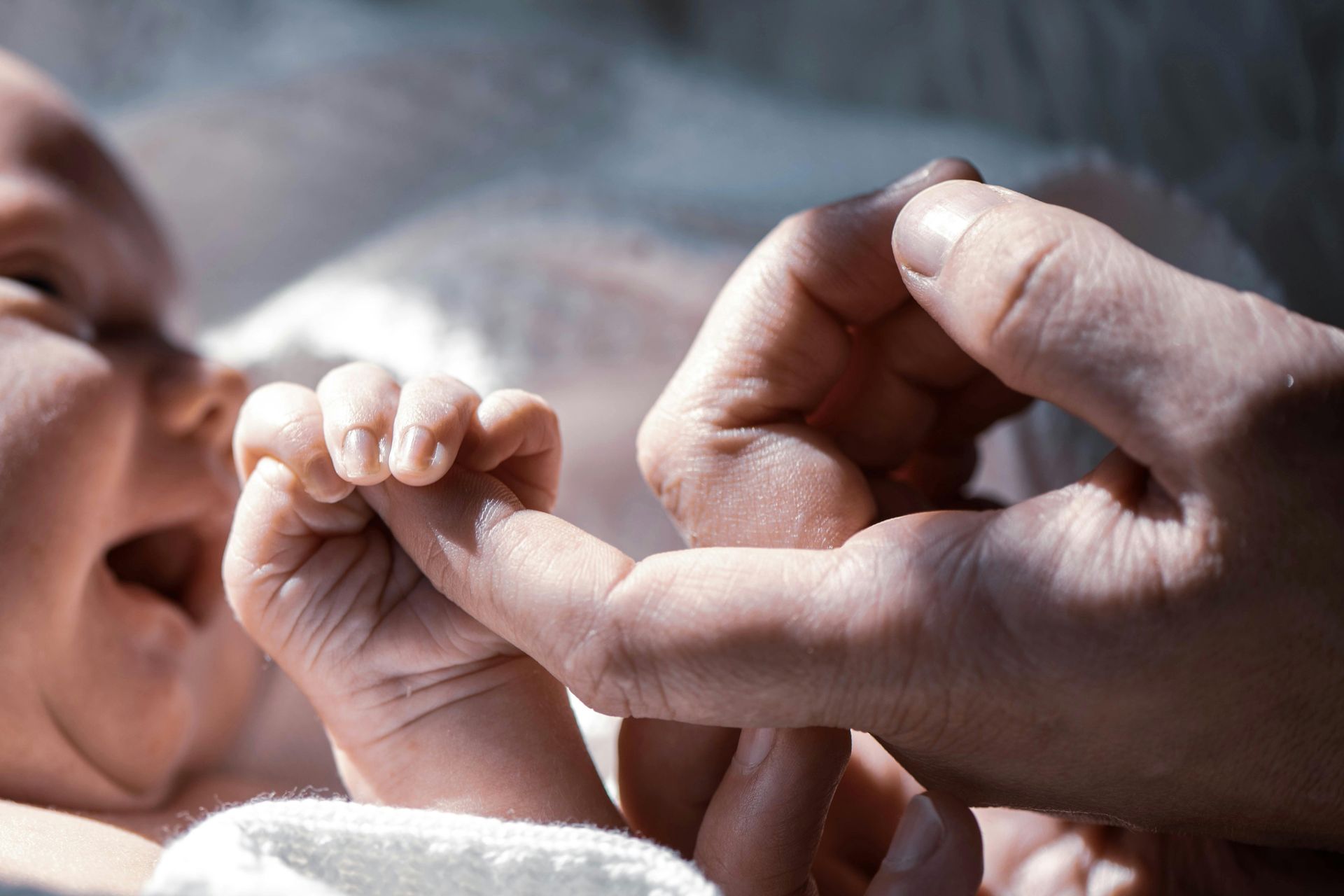
15 Then the king of Egypt said to the Hebrew midwives, one of whom was named Shiphrah and the other Puah, 16 “When you serve as midwife to the Hebrew women and see them on the birthstool, if it is a son, you shall kill him, but if it is a daughter, she shall live.” 17 But the midwives feared God and did not do as the king of Egypt commanded them, but let the male children live. - Exodus 1:15-17 ESV
Years have passed between the end of Genesis and the beginning of Exodus. We read in Exodus 1:
6 Then Joseph died, and all his brothers and all that generation. 7 But the people of Israel were fruitful and increased greatly; they multiplied and grew exceedingly strong, so that the land was filled with them. - Exodus 1:6-7 ESV
Notice two details in these verses. First, Joseph and all his generation had died. Second, the Israelites, who had settled in Goshen, had now “multiplied and grew exceedingly strong, so that the land was filled with them.” We are not told how many years have passed, but it is clear that the seventy who arrived in Egypt under Joseph had become a large multitude of people.
Something else happened in those years between Genesis and Exodus. Exodus 1:8 tells us that
“there arose a new king over Egypt, who did not know Joseph.”
We are left to wonder why this new king did not know Joseph. Understand, first, however, that a whole generation had passed, and Joseph had been dead for many years by this time. Second, we are not told where this new king came from. The Commentary Critical and Explanatory on the Whole Bible has this to say about verse 8:
About sixty years after the death of Joseph a revolution took place—by which the old dynasty was overthrown, and upper and lower Egypt were united into one kingdom. Assuming that the king formerly reigned in Thebes, it is probable that he would know nothing about the Hebrews; and that, as foreigners and shepherds, the new government would, from the first, regard them with dislike and scorn.
Commentary Critical and Explanatory on the Whole Bible". Marion, IA: Laridian, Inc., 2021. Public Domain
What is clear is that this new king did not know Joseph, understand his contribution to the nation, or and why the people of Israel lived in Goshen. What is clear, however, is his response to their presence:
9 And he said to his people, “Behold, the people of Israel are too many and too mighty for us. 10 Come, let us deal shrewdly with them, lest they multiply, and, if war breaks out, they join our enemies and fight against us and escape from the land.” - Exodus 1:9-10 ESV
This new king had four concerns about the people of Israel in his land. First, there were too many of them. They were no longer a small group of foreigners in Egypt. They represented a large part of the population base of that region.
Second, they were too mighty for him. We are not told what brought Pharaoh to this realization. Clearly, however, the blessing of God was on His people and they prospered greatly at that time. It is quite possible that they were living at a higher standard than the average person in Egypt.
Third, they had a different allegiance, and the king feared that if war broke out the Israelites might join the enemy against Egypt. The people of Israel had another God and did not follow the customs and traditions of Egypt. They had different laws that governed their behaviour. They were foreigners in Egypt with no particular allegiance to Pharaoh. This was concerning for him.
Finally, Pharaoh feared that Israel would escape his land. Pharaoh saw the blessing of God on the lives of the Israelites and knew that this blessing flowed also to them because of their presence among them. He set his heart, therefore, to do what he could to benefit from their presence but keep them under control.
Exodus 1:11 tells us that Pharaoh set taskmasters over the Israelites to “afflict them with heavy burdens.” This new Pharaoh subjected Israel to forced labour. This would establish his dominance over them and keep them from working their own fields or tending to their sheep. This would strip them of prosperity and make them more dependent on Pharaoh. By using Israel as cheap labour, Pharaoh advanced his own cause at their expense. Exodus 1:11 tells us that Israelite forced labour built the cities of Pithom and Raamses for Pharaoh.
The question we ask ourselves here is this: Why would God allow His people to be subjected to forced labour? While none of us can speak for God, what becomes obvious is what happens when Pharaoh begins to oppress Israel:
12 But the more they were oppressed, the more they multiplied and the more they spread abroad. And the Egyptians were in dread of the people of Israel. - Exodus 1:12 ESV
God used oppression to multiply and spread His people throughout the land. This, in turn, caused the Egyptians to be in greater dread of them. God showed His people that He was bigger than what the Egyptians were doing to them. He showed the Egyptians the nature of the God they were fighting.
Notice Pharaoh’s response to the blessing of God on the lives of his people under forced labour:
13 So they ruthlessly made the people of Israel work as slaves 14 and made their lives bitter with hard service, in mortar and brick, and in all kinds of work in the field. In all their work they ruthlessly made them work as slaves. - Exodus 1:13-14 ESV
Pharaoh tightens his grip. He commits to fight what God was doing in the lives of His people. The word used in this verse is פֶּרֶךּ (perek) meaning severe or cruel. While God wanted to bless His people, Pharaoh’s objective is to break them. He declares war with God over Israel, makes them his slaves, and treats them cruelly.
We discover from verse 14 that the prosperous and peaceful lives of Israel in Goshen radically changed. The Egyptians “made their lives bitter with hard service, in mortar and brick, and in all kinds of work in the field.”
It is not God who is lashing out at the Israelites here. It is the cruelty of a fearful king who saw the blessing of God on His people and despised them for it.
We are in the midst of a spiritual battle. Consider what the Lord Jesus tells us about this in John 3:
19 And this is the judgment: the light has come into the world, and people loved the darkness rather than the light because their works were evil. 20 For everyone who does wicked things hates the light and does not come to the light, lest his works should be exposed. - John 3:19-20 ESV
Those who love the world, hate the light of Christ. This means that we who love the Lord and walk in His purpose, will be hated by the world:
13 And you will be hated by all for my name’s sake. But the one who endures to the end will be saved. - Mark 13:13 ESV
The apostle Paul tells us that anyone who wants to live a godly life in Christ Jesus will be persecuted:
12 Indeed, all who desire to live a godly life in Christ Jesus will be persecuted, - 2 Timothy 3:12 ESV
This is what we are seeing in this passage. The clash between the kingdom of God and the kingdom of evil is very real. Satan lashes out at the people of God, seeking to crush and abuse them.
Note the extent of this demonic oppression against Israel in those days:
15 Then the king of Egypt said to the Hebrew midwives, one of whom was named Shiphrah and the other Puah, 16 “When you serve as midwife to the Hebrew women and see them on the birthstool, if it is a son, you shall kill him, but if it is a daughter, she shall live.” - Exodus 1:15-16 ESV
What kind of evil is it that commands a midwife to kill every male child born to an Israelite mother? This, however, became the law of the land, as commanded by the king. The intention was to keep Israel from multiplying. Evidently, God was still blessing His people under this cruel servitude as slaves, and they were continuing to increase in number. The command of Pharaoh to the midwives was to defeat the purpose of God.
Let’s take a moment to consider the two midwives to whom Pharaoh issued his decree. Their names were Shiphrah and Puah. The name Shiphrah comes from the Hebrew word שִׁפְרָה (šiphrāh) meaning brightness. The word itself is derived from the root word שֵׂפֶק (šāphar) meaning to glisten. The name Puah is derived from the word פּוּעָה (pūʼāh) which interestingly also means brilliant or to glisten. The point is this. In the midst of this great darkness in Israel's history, God rose up two glistening stars to brighten the lives of His people.
God did not leave Israel to fight this battle alone. He counters what Pharaoh did by raising up two simple women. In the strength of the Lord, these two midwives would thwart the evil intention of the most powerful ruler on the earth, and break through the darkness of Pharaoh’s plan. They would prove the truth of the Psalmist who said:
13 With God we shall do valiantly; it is he who will tread down our foes. - Psalms 108:13 ESV
When oppressing the people of Israel and making them slaves did not weaken them or stop them multiplying, Pharaoh came up with a bolder plan. By the king’s decree, when Shiphrah and Puah assisted in a birth, they were to kill every male child born to an Israelite woman. What the king did not understand, however, when he gave this command, was that Shiphrah and Puah “feared God” (verse 17). Because they feared God, they did not do as the king of Egypt commanded.
Shiphrah and Puah risked the wrath of Pharaoh out of a fear of God. They were willing to sacrifice their own lives to honour the God of Israel and do His will. There may come a time in each of our lives where our fear of God will be put to the test. Not everyone passes this test. Many give in, and surrender to evil and sin. Shiphrah and Puah, however, stood up against the order of the Pharaoh of Egypt and resisted his command.
This defiance did not go unnoticed. He called them to appear before him and demanded an accounting. “Why have you done this, and let the male children live?” Pharaoh questioned in verse 18. Note their response in verse 19:
19 The midwives said to Pharaoh, “Because the Hebrew women are not like the Egyptian women, for they are vigorous and give birth before the midwife comes to them.”
The midwives declared the Hebrew women to be vigorous, and told Pharaoh that they did not need midwives to assist them, they were strong and gave birth on their own. We are not told what Pharaoh’s response was to the midwives, nor do we understand the role Shiphrah and Puah played in protecting the Israelite women and their male children from this command of Pharaoh. What is clear is how God responds to them. Verses twenty and twenty-one tells us that “God dealt well with the midwives.” That is to say, they knew His special favour in their lives because they chose to obey Him rather than Pharaoh. God also gave the midwives families (verse 21). He blessed them with children because they protected the children of His people. God turned the very thing Pharaoh asked the midwives to do to Israel against him and the people continued to multiply.
20 So God dealt well with the midwives. And the people multiplied and grew very strong. - Exodus 1:20 ESV
Pharaoh subjected Israel to forced labour, made them slaves and attempted to kill the male children, but none of this worked. God’s people continued to multiply and grow stronger day by day. Shiphrah and Puah stood up against the purpose of Pharaoh, choosing to honour God rather than that king. These two midwives, out of a deep fear and reverence for God, resisted Pharaoh and saved the lives of countless male infants born in those days.
The story of Shiphra and Puah forces us to ask the question: How much do I fear God? Do I only obey when it is convenient, or will I risk everything to honour the God I fear and do what is right? Will I stand like them against the powerful forces of evil and choose obedience rather than compromise?
Exodus 1 recounts how two simple midwives thwarted the plan of one of the most powerful kings on earth at that time. Their commitment to obey God and do what was right, saved the lives of many infant males from Pharaoh’s evil plan. Their simple obedience made them powerful instruments in His hands.
Let me make one more point here. Have you ever looked at your circumstances and thought: How could anything get any worse? Israel was being oppressed. The Pharaoh of Egypt had made them his slaves, and their lives were “bitter with hard service,”
(Exodus 1:14). The king had now set his eyes on murdering every male child born to Israel. Things were certainly pretty bad for the people of God. Understand, however, that when Pharaoh subjected them to forced labour, God responded by causing them to multiply and spread abroad (Exodus 1:12). When Pharaoh commanded the midwives to kill every male child born to an Israelite woman, God led him to speak to two midwives who feared His name. He also strengthened the Israelite women so that they gave birth on their own (Exodus 1:19). The result was that His people continued to multiply and grew very strong (Exodus 1:20).
Despite the evil of that day, God was very much present with His people, strengthening and multiplying them for His purpose. Admittedly, that process was difficult, but if God’s people opened their eyes, they would see how He was using whatever Pharaoh did to make them a stronger people. I have to admit that all too many times I see the struggle but fail to see the strengthening hand of God, equipping, training, and drawing me closer through what I suffer. May God open our eyes to see His presence in the difficulties we currently face.